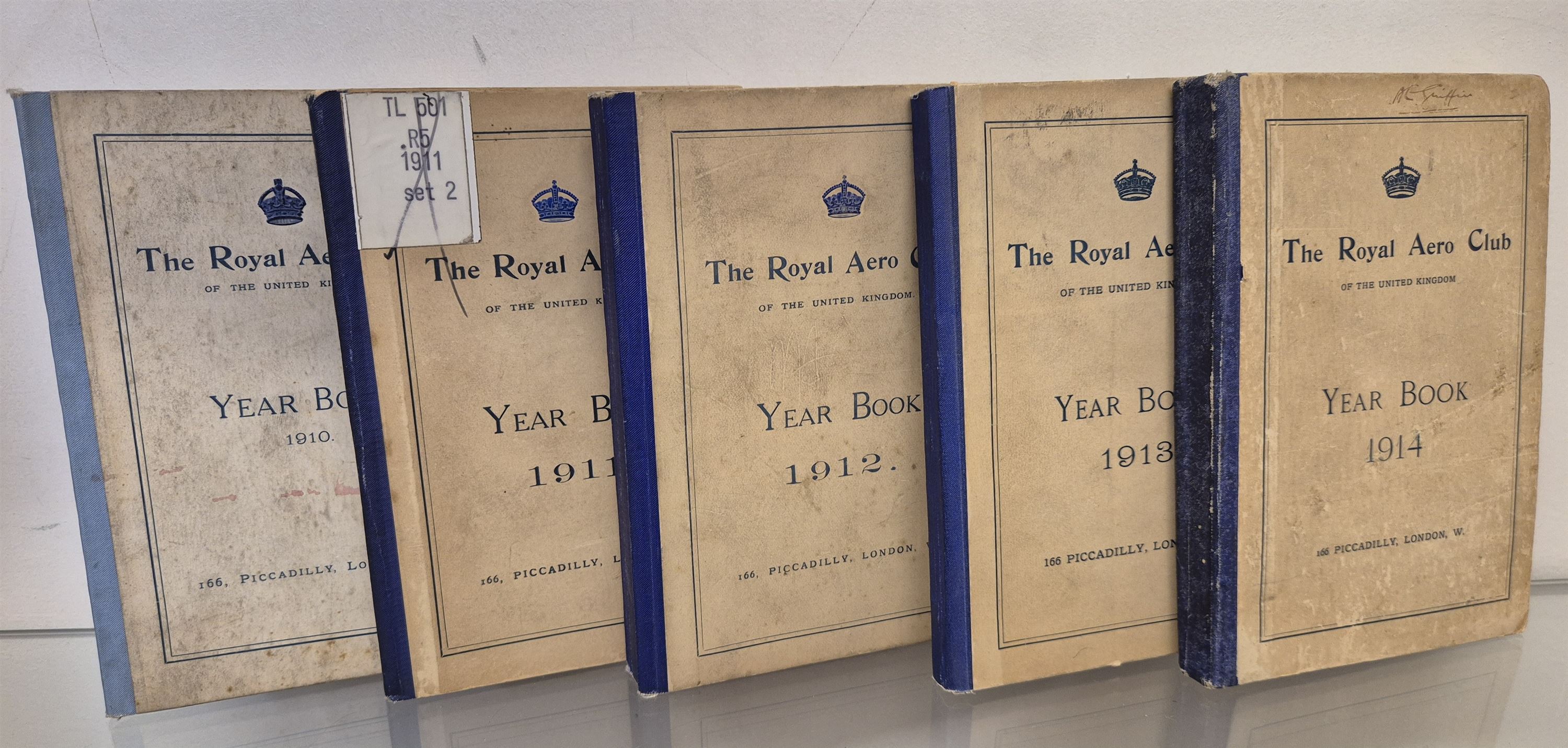
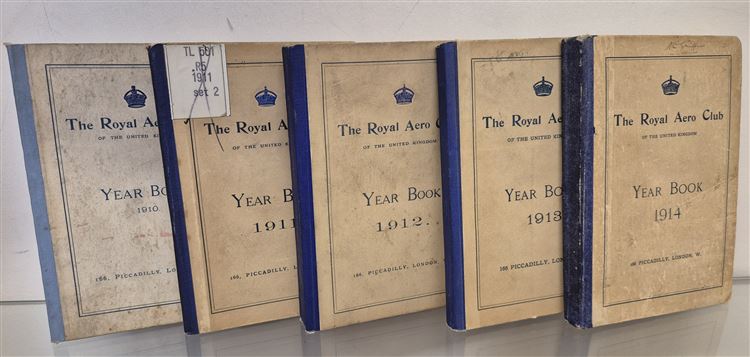
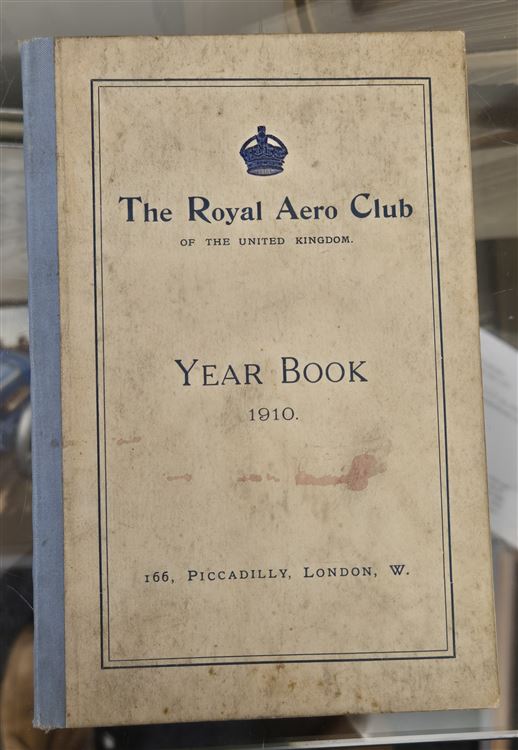
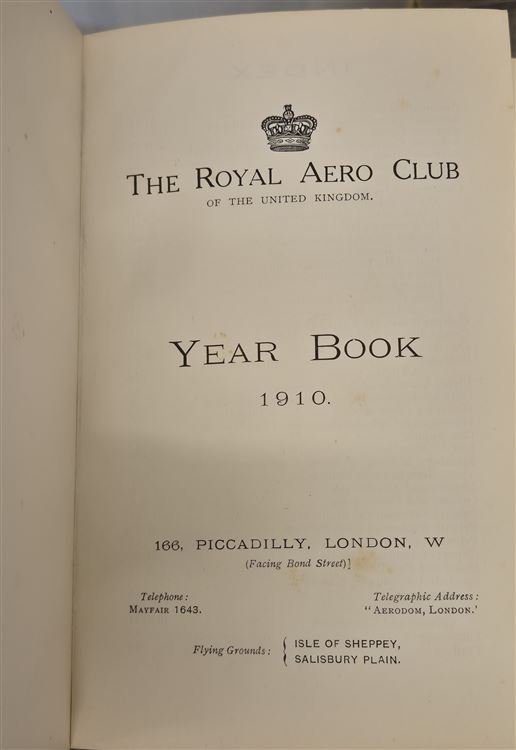
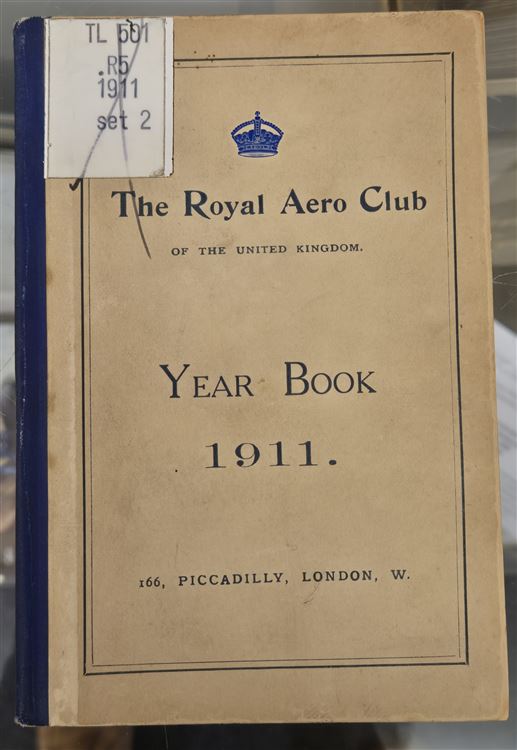
The Royal Aero Club 1st handbook 1st Issue 1910 - 1914 Five Handbooks
Harold E. Perrin
Edition:
1st Edition
Published By:
The Royal Aero Club
The five handbooks issued by the Royal Aero Club between 1910 and 1914 chart the extraordinary transformation of aviation from a dangerous experimental hobby into a structured, regulated, and eventually military-ready discipline.
Each year's issue added new layers of rules, records, and technological breakthroughs. The "Royal" Prefix: This was the first handbook published after King Edward VII granted the club its "Royal" status in February 1910. Licensing Begins: The 1910 issue established the Club as the sole authority for issuing Aviator Certificates (pilots' "tickets") in the UK.Pioneer Records: It documented the very first licences, including J.T.C. Moore-Brabazon (Certificate No. 1) and Charles Rolls (No. 2). Strict Flight Tests: New FAI-aligned rules required candidates to complete two distance flights of 5km and one altitude test of at least 50 metres.Diversity in Flight: This year saw Hilda Hewlett become the first woman in the UK to earn a pilot's licence (No. 122).Training Expansion: The handbook reflected the rise of civilian flying schools at Brooklands and Hendon, where courses cost approximately £75 (roughly £5,700 today).The Royal Flying Corps (RFC): The 1912 handbook coincided with the formation of the RFC, marking the official beginning of military aviation in Britain.Hydro-Aeroplanes: The Club began debating how to certify pilots for "water-planes," a major technological shift documented in this period. Sporting Events: It detailed the first Aerial Derby around London, which became a staple of the Club's sporting calendar.The Britannia Trophy: Presented in 1913, this became one of the Club's most prestigious awards for the most meritorious flight of the year.Safety and Records: As engines became more reliable, the handbook recorded longer cross-country flights and the first serious attempts at airborne radio communication.Seaplane Rules: The 1913 records finalised the FAI decision that ordinary certificates were valid for both land and water flightsMass Qualification: By the time this handbook was issued, the number of qualified pilots had surged from a handful in 1910 to over 800. Technical Sophistication: The 1914 issue reflected aircraft that were no longer just "wire and wood" but featured refined fuselages and specialised protective clothing for pilots. Transition to Service: The final issue of this era serves as a record of the men and machines that would form the backbone of the Royal Naval Air Service (RNAS) and the RFC at the start of World War I. St Mary's Books are delighted to offer this unique run.
Book Condition:
Very Good
Author:
Harold E. Perrin
Binding:
Hardback
Price £425.00